
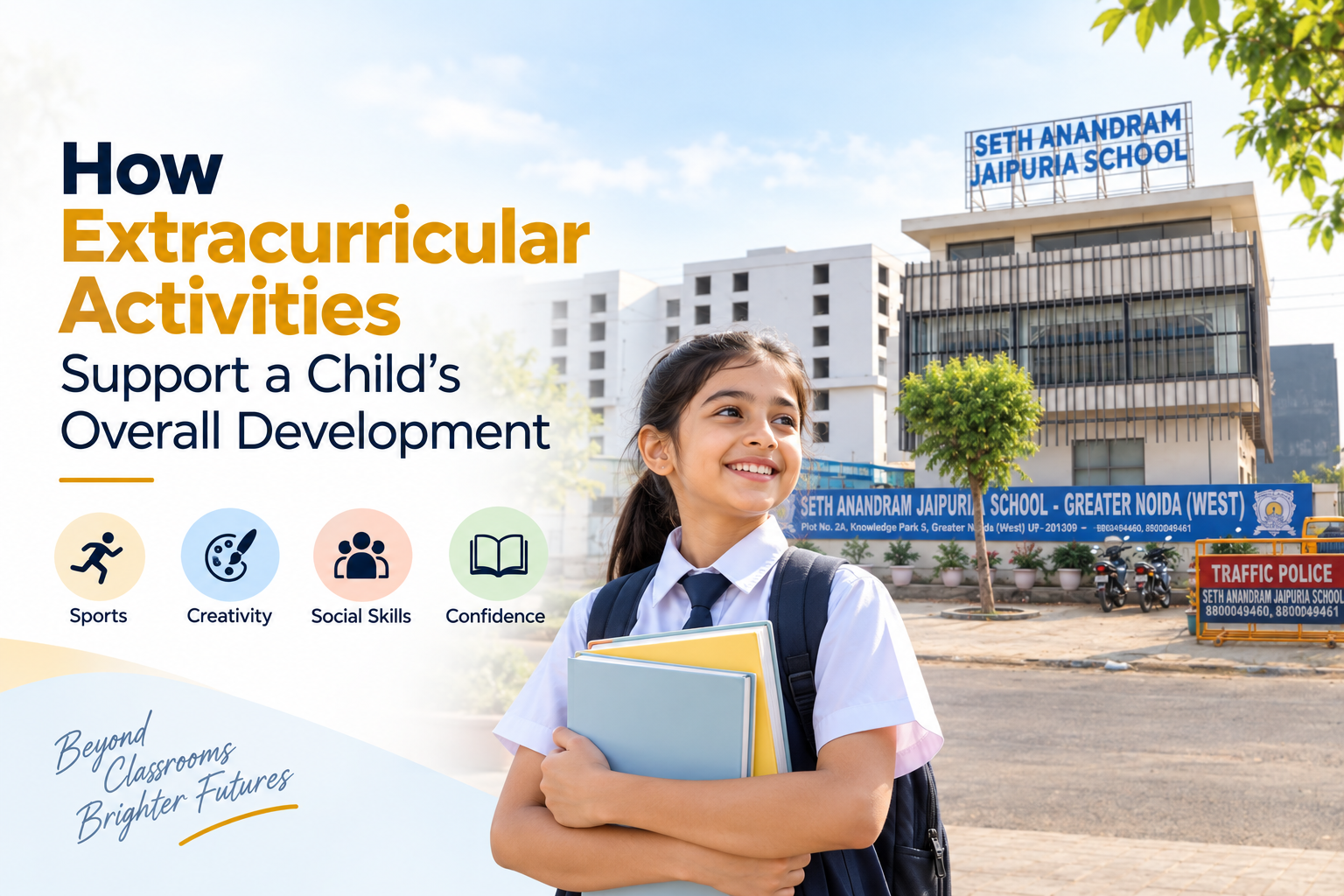
How Extracurricular Activities Support a Child’s Development
Education is not only about textbooks, examinations, and classroom learning. Children also need opportunities to explore their interests, express themselves, work with others, and develop practical skills. This is where extracurricular activities can play an important role in a child’s overall development.
For parents exploring schools in Greater Noida West, extracurricular activities can be an important part of evaluating a school’s overall learning environment. Activities such as sports, music, dance, art, public speaking, debates, clubs, and creative projects can complement academic education and give students opportunities to discover their interests.
A balanced school experience combines academic learning with activities that support confidence, creativity, communication, teamwork, and physical development.
What Are Extracurricular Activities?
Extracurricular activities are activities that students participate in beyond their regular academic lessons. They can take place during or after school hours and may cover a wide range of interests.
Common examples include:
- Sports and physical activities
- Music and singing
- Dance
- Art and craft
- Drama and theatre
- Debates and public speaking
- Quiz competitions
- Science and technology clubs
- Literary activities
- Cultural events
- Community and social activities
The availability of these activities may differ from one school to another. Parents should therefore understand what programs a school offers and how students can participate in them.
Why Extracurricular Activities Matter in School Education
Academic knowledge is important, but children also need opportunities to develop skills that are useful in everyday life. Extracurricular activities provide practical situations where students can communicate, collaborate, make decisions, and learn from both success and mistakes.
For students attending CBSE schools in Greater Noida West, extracurricular opportunities can complement classroom education by providing different ways to learn and participate.
These activities can contribute to several areas of development, including:
- Confidence
- Communication
- Creativity
- Teamwork
- Leadership
- Discipline
- Time management
- Problem-solving
- Physical fitness
- Social interaction
1. Building Confidence in Children
One of the major benefits of extracurricular activities is the opportunity to build confidence.
A student who participates in a debate, stage performance, sports competition, art exhibition, or school event gets an opportunity to present their abilities in front of others.
Regular participation can help students become more comfortable with:
- Speaking in front of an audience
- Working with classmates
- Performing on stage
- Sharing ideas
- Taking responsibility
- Participating in competitions
Confidence develops gradually through practice and participation. Schools can support this process by creating a positive environment where students are encouraged to participate without unnecessary pressure.
2. Developing Communication Skills
Communication is an important skill for both education and future professional life.
Activities such as debates, storytelling, drama, presentations, quizzes, and group discussions encourage students to express their thoughts clearly.
Through these activities, children can practice:
- Speaking clearly
- Listening to others
- Presenting ideas
- Asking questions
- Expressing opinions respectfully
- Communicating with different people
A school that provides regular opportunities for communication can help students become more comfortable expressing themselves.
3. Encouraging Teamwork and Collaboration
Many extracurricular activities require students to work as a team.
Team sports, theatre, group projects, music performances, competitions, and school clubs require students to cooperate with others. They learn that achieving a common objective often requires communication and coordination.
What Do Students Learn Through Team Activities?
Students can learn to:
- Share responsibilities
- Respect different opinions
- Support teammates
- Solve disagreements
- Work toward common goals
- Understand the importance of cooperation
These experiences can be valuable beyond school because teamwork is relevant in higher education, workplaces, and everyday life.
4. Improving Leadership Skills
Extracurricular activities can also provide opportunities for students to take responsibility.
For example, a student may become a team captain, club representative, event volunteer, group leader, or coordinator for a school activity.
Such responsibilities can encourage students to develop:
- Decision-making skills
- Responsibility
- Organization
- Communication
- Problem-solving
- Accountability
Leadership does not always mean being the most visible student. It can also involve helping others, completing responsibilities, and contributing positively to a group.
5. Supporting Creativity
Children naturally have different interests and ways of expressing themselves. Academic subjects may not always provide enough opportunities for creative exploration.
Art, music, dance, drama, creative writing, photography, design, and other activities can provide students with alternative ways to express their ideas.
Creative activities can encourage children to:
- Think differently
- Explore new ideas
- Experiment
- Express emotions and thoughts
- Develop imagination
- Create original work
This is one reason parents comparing the best schools in Greater Noida West may consider the range of creative activities available to students.
6. Promoting Physical Fitness Through Sports
Sports and physical education are important components of a balanced school experience.
Activities such as football, basketball, athletics, cricket, badminton, and other physical exercises can encourage students to remain active.
Regular participation in sports can help students develop:
- Physical fitness
- Coordination
- Teamwork
- Discipline
- Concentration
- Sportsmanship
Sports also teach students that improvement often requires regular practice and consistent effort.
7. Teaching Discipline and Time Management
Balancing academic responsibilities with extracurricular activities requires planning.
Students participating in sports, music, clubs, competitions, or performances need to manage their schedules and complete their academic work on time.
This can encourage them to understand:
- How to prioritize tasks
- How to plan their time
- Why regular practice matters
- How to meet deadlines
- How to balance different responsibilities
These habits can become useful as students progress to higher classes and eventually enter higher education.
8. Helping Students Discover Their Interests
Every child has different strengths and interests. Some may enjoy sports, while others may be interested in music, art, technology, public speaking, or literature.
Extracurricular activities allow students to try different things and discover what they enjoy.
A child who initially participates in an activity casually may eventually develop a strong interest or talent in that area.
For this reason, schools can provide a variety of activities rather than focusing on only one category.
9. Developing Problem-Solving Skills
Many activities require students to think, make decisions, and find solutions.
Science clubs, quizzes, competitions, team games, creative projects, and technology activities can present students with challenges that require practical thinking.
Instead of simply memorizing information, students may need to analyze a situation and decide what to do next.
This can encourage independent thinking and problem-solving abilities.
10. Encouraging Social Development
School is an important environment for children to develop social skills.
Extracurricular activities bring students together in different settings and allow them to interact beyond regular classroom lessons.
Students can learn how to:
- Make new friends
- Work with different personalities
- Respect others
- Share ideas
- Cooperate with classmates
- Handle disagreements appropriately
These experiences can contribute to a more inclusive and collaborative school environment.
How Parents Can Evaluate Extracurricular Opportunities
When comparing schools in Greater Noida West, parents can ask specific questions about extracurricular activities rather than simply checking whether a school offers them.
Consider asking:
- What sports are available?
- Does the school organize competitions?
- Are music and performing arts offered?
- Are students encouraged to participate in clubs?
- Are there opportunities for public speaking?
- Does the school conduct cultural events?
- Are activities available for different age groups?
- How often do students participate?
- Are activities balanced with academic responsibilities?
Parents can also visit the school and observe how students participate in different activities.
Extracurricular Activities and CBSE Education
A CBSE-based education can include learning experiences beyond conventional classroom instruction. Academic learning remains important, but students can also benefit from opportunities that encourage physical, creative, social, and practical development.
Parents searching for a Best CBSE School in Greater Noida West can therefore consider the school’s academic approach together with its extracurricular opportunities.
The objective should be to provide children with a balanced educational experience where they can study, participate, explore interests, and develop useful life skills.
How Schools Can Create a Balanced Learning Environment
A good extracurricular program should complement academics rather than create unnecessary pressure.
Schools can support balanced development by:
- Offering age-appropriate activities
- Providing multiple activity choices
- Encouraging participation
- Recognizing student effort
- Providing trained activity instructors
- Maintaining suitable sports and activity spaces
- Giving students opportunities to showcase their work
- Balancing activities with academic schedules
The focus should be on participation, learning, and development rather than competition alone.
Frequently Asked Questions
1. Why are extracurricular activities important for children?
Extracurricular activities can support children’s confidence, communication, creativity, teamwork, leadership, physical development, and social skills alongside academic learning.
2. Which extracurricular activities are best for students?
There is no single activity that is best for every child. Sports, music, art, dance, drama, public speaking, clubs, and other activities can be useful depending on the child’s interests and abilities.
3. Do extracurricular activities affect academic performance?
A balanced activity schedule can help students develop time management, discipline, concentration, and organizational skills. However, children should have a healthy balance between academics, activities, rest, and personal time.
4. How do sports help children?
Sports can support physical fitness while helping children learn teamwork, discipline, coordination, communication, and sportsmanship.
5. Can extracurricular activities improve confidence?
Yes. Activities such as public speaking, performances, competitions, and team participation can give students opportunities to practice skills and become more comfortable participating in front of others.
6. Should parents consider extracurricular activities when choosing a school?
Yes. Parents can consider extracurricular opportunities along with curriculum, teaching quality, faculty, infrastructure, safety, location, and student support.
7. How can children discover their interests?
Children can explore different activities such as sports, music, art, technology, literature, drama, and public speaking. Trying different activities can help them identify areas they genuinely enjoy.
8. How can schools balance academics and extracurricular activities?
Schools can create structured schedules, offer age-appropriate activities, encourage participation without excessive pressure, and ensure that extracurricular programs complement rather than interfere with academic learning.
Conclusion
Extracurricular activities can be an important part of a child’s overall school experience. They provide opportunities to develop confidence, communication, creativity, teamwork, leadership, discipline, physical fitness, and social skills.
For parents exploring schools in Greater Noida West, it is useful to look beyond academic facilities and understand how a school supports students’ interests outside the classroom.
The right balance between academics and extracurricular activities can give children opportunities to learn in different ways, discover their strengths, and develop skills that can support them throughout their educational journey.
When choosing a school, parents can visit the campus, explore the available activities, speak with the school team, and understand how students are encouraged to participate.
A well-rounded education gives children the opportunity not only to learn from books but also to participate, explore, create, communicate, and grow.




Leave a Reply